“On tour, we always used to be at the mercy of the house mics. Sometimes they’re great and sometimes they’re not so great depending on, say, if you’re in a smaller B market. Now I bring my whole mic setup out. Now we know what we we’re getting every night!”
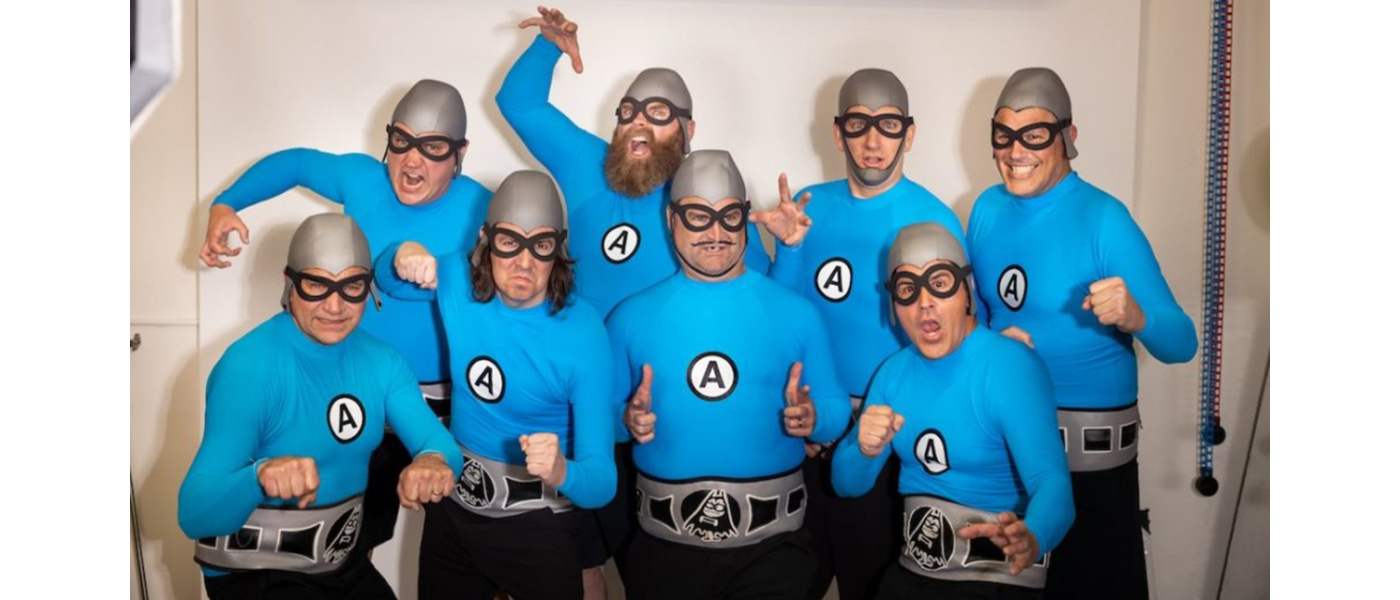
Part rock band with ska-punk roots and one of the most rabid fanbases ever known, part TV producers whose antics pit the heroic band members against comic-book-esque villains on The Aquabats Super Show, and part creative force behind the star-studded musical children’s program Yo Gabba Gabba, The Aquabats are a cross-media phenomenon. They work clean enough for kids but snarky enough for the parents to chuckle along without worry — and they do it all to a body-moving soundtrack using AUDIX microphones, beginning with the new PDX720 dynamic studio vocal mic. Drummer Ricky Fitness (Richard Falomir) details their use of the PDX; the A133 studio condenser, the SCX25A “lollipop” condensers, and gallery of drum mics including the D2, D4, D6, and i5. He monitors through A150 headphones.
Can we start by asking you your wayback point of entry into playing music?
I come from a family of musicians. My father was a musician. My uncle was bass player a Latin soul band from Los Angeles called Tierra. I knew early on that I wanted to play music. It was simply the drums that were my gateway. I played at a very young age, but I didn’t get a drum set until I was in high school. By that time, I had been playing so much on practice pads and taking lessons that when I got that kit, I played in high school marching band and jazz band. In 11th grade, I joined a band called Assorted Jellybeans. Within three or four months, we got signed to an indie label started by the Vandals called Kung Fu Records. They started calling for records and we were the first release, then we started touring right away. From there, the Orange County ska-punk scene was exploding at that time, and I met The Aquabats. I’ve been in the Aquabats since I joined as their drummer in 2001, and the rest is history. We do a lot of things with the Aquabats, such as our TV show.
Tell us more about the TV show…
The first one was Yo Gabba Gabba. Our singer Christian Jacobs co-created it.
The kids’ show with all the musical guests?
Yeah, he created that with friend of his, Scott Schultz, who also worked with the Aquabats. The original intent was to have an Aquabats show all along, but multiple tries didn’t quite pan out. Until we did Yo Gabba Gabba, which was for preschool kids. We were all starting to have kids and we noticed the shows on TV were hard to watch and didn’t teach kids anything other than how to make noise and sounds. So, Yo Gabba Gabba brought me on as one of the songwriters. At the time, I had no résumé for other than that I used to make little beats on four-track recorders.
Coincidentally, the show had a lot of hip-hop and cool indie music. That was my first dip into using Pro Tools and getting into the whole studio side of writing music. Twenty years later, I’m still doing it, self-taught, which is a blessing. I get to play in The Aquabats and meet all these musical guests on a kids’ show that’s like Sesame Street if it had been imagined by Sid and Marty Krofft.
What’s the backstory about the Aquabat characters?
It started as a joke. I wasn’t in the band at the time, but they had played birthday parties and a couple really loose shows locally. Our trumpet player Cat Boy, Boyd, his brother had a wetsuit company. Boyd just did the first show in a wetsuit and acting silly on stage. A few shows after, our trumpet player came up with the helmet, then the mask and he’s like, I made these cool things — we can wear him onstage. That slowly evolved into each person having their own onstage persona.
Fast-forward years, and that evolved into more of a superhero theme where we fight actual bad guys. Our personal characters are loosely based on who we are in real life, so Ricky Fitness is sort of a dingbat reminiscing about when he was in really good shape. Which is good because I can’t find the time to work out like I used to! Our bass player Crash McLarson is tall, and his character can grow 100 feet tall and break things no one else can break. Our names played into lot of us not having acting experience. Basing them our real-life selves helped us inhabit these characters.
What was your first exposure to AUDIX mics? Was it as a drummer given that they were initially known for their drum lines?
I had always seen AUDIX mics, just touring around. I used a D4 on a lot of different things. I had always seen other artists using them and knew they had a great reputation. When I started to acquire more, my mic locker went all over the place — it was whatever I picked up along the way! They upped the quality of what I was able to do, whether that was studio work, onstage, or teaching young kids to play drums online. They’ve made such a difference. I absolutely love every time I write or record now. I don’t have to go into a commercial studio. I can just do it all in my little studio in the back my backyard.
What mics are on your drum kit right now?
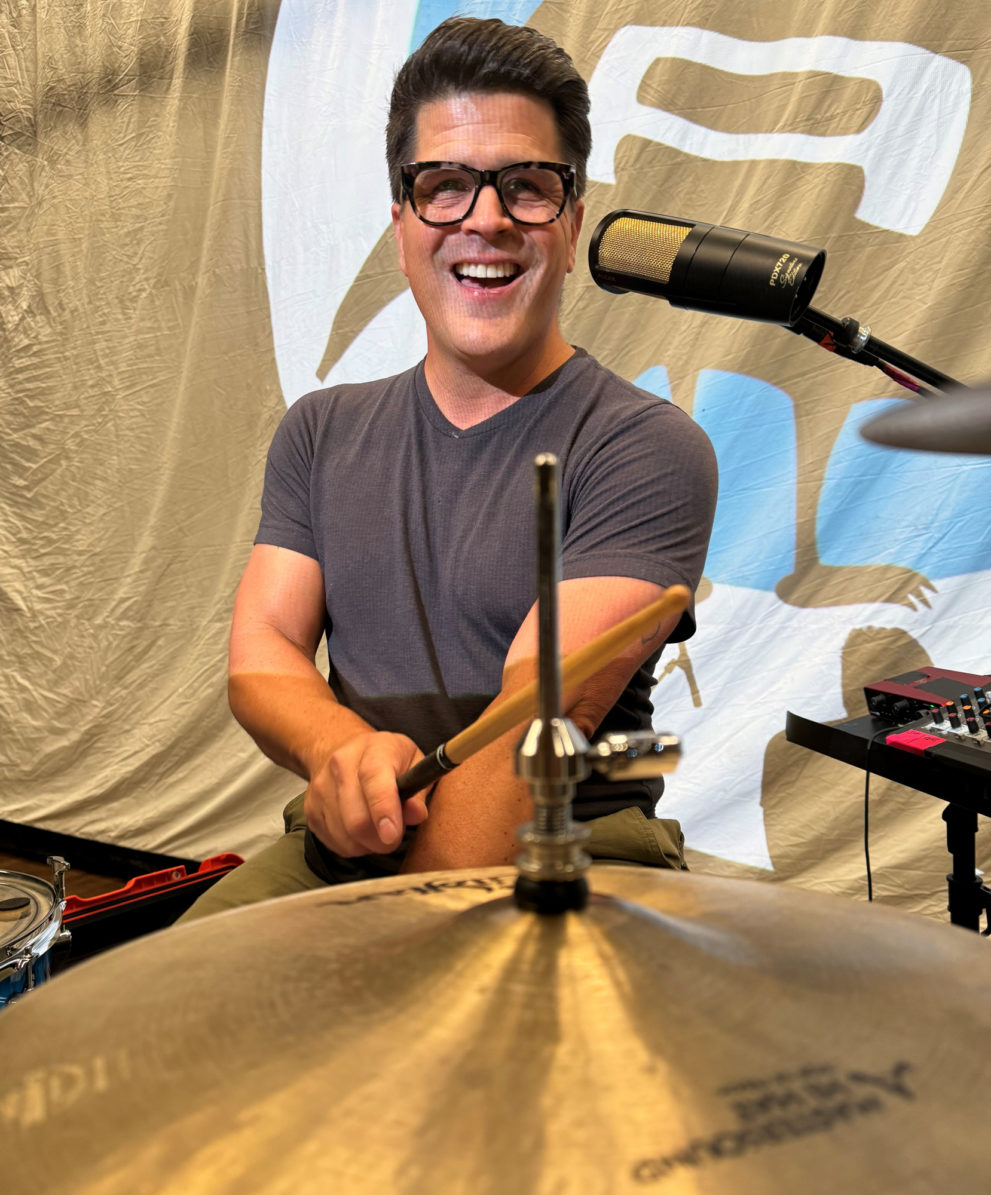
There’s the multi-pack meant to cover your whole set — I think it’s called the DP7. It has all the mics for toms, your snare, overheads, and kick. But the cool thing it also has mounting clamps that hugely reduce the footprint of mic stands around my kit. But what I’m really digging now is that new PDX720.
It’s marketed as a studio dynamic mic for vocals, but we hear a lot of artists are finding other applications for it.
Yes. On tour, the PDX720 is working great on the outside of the kick drum while I use a D6 on the inside. Then the D4 and D2s are on my toms, and I love them. Of course, an i5 on the snare. But my favorite AUDIX mics I’ve picked up recently are a pair of the “lollipop” condensers. Do you know the ones?
The SCX-25A. A lot of people use them on grand piano as well as for drum overheads. How did it come up to try the PDX720 outside the kick drum?
That was our front-of-house guy. He tried it on my snare first. Then he’s like, ooh, I’m gonna get curious. He threw it on the kick drum on the outside. And we liked it so much, that’s where it lived the for the rest of the tour. That’s not what I would have thought of!
We’ve covered a lot of models, which is definitely appreciated. Any comments about how AUDIX in general makes your life easier?
On tour, we always used to be at the mercy of the house mics. Sometimes they’re great and sometimes they’re not so great depending on, say, if you’re in a smaller venue. This time I brought my whole mic setup out. Now we know what we we’re getting every night. It only took 20 years to figure it out! [Laughs.] Bringing your own mics makes an absolutely huge difference. Offstage, as I said, AUDIX also changed the game for my songwriting and composing.
Are there any other AUDIX mics in the band, for vocals or other sources?
I’m currently using the A133 large-diaphragm condenser for cutting vocals in the studio and it’s been working out great.
What do you especially like about the SCX-25A lollipops?
What I noticed right away was the detail in them. I’m bad at explaining this. I record a lot of the stuff I do close because I have a small space. Their sound is just so balanced. It has clarity. It’s so the right amount of detail that I’m looking for, you know, capturing the toms and the cymbals and even my hi-hats when I use the SCXs as overheads. I’m curious how they’d sound on vocals.
Back to the PDX720, AUDIX’s newest mic as of this interview. Have you found other unexpected use cases for it in the studio?
Absolutely. Fortunately, the band was in the throes of production when we got the PDX. We tried it on voiceover stuff. I also used it for quite a few of the songs where I was working on vocals for new songs. We have multiple characters doing voiceovers at the same time. So, we had the PDX in in the mix and different actors and producers using it. Our guy Cameron Webb, who we work with a lot, is kind of a mic snob. First, he loves the way the PDX looks. I think it catches people’s eye right away and exudes quality. We’ve found other applications, too. I know AUDIX’s reputation as a drum mic company is awesome, but the PDX is an amazing jack-of-all trades.
On that subject, people normally think of a condenser for studio vocals, but a dynamic mic can take higher sound pressure levels as well …
I think I think they did good with that. The other thing I forgot to mention is a use [of the PDX720] on my snare — the presence boost on the mic. You get either 1.5dB or 3dB of midrange boost, and I love it on snare for some tracks.
With the Aquabats’ roots in the Orange County ska-punk scene, would you still refer to yourselves as ska?
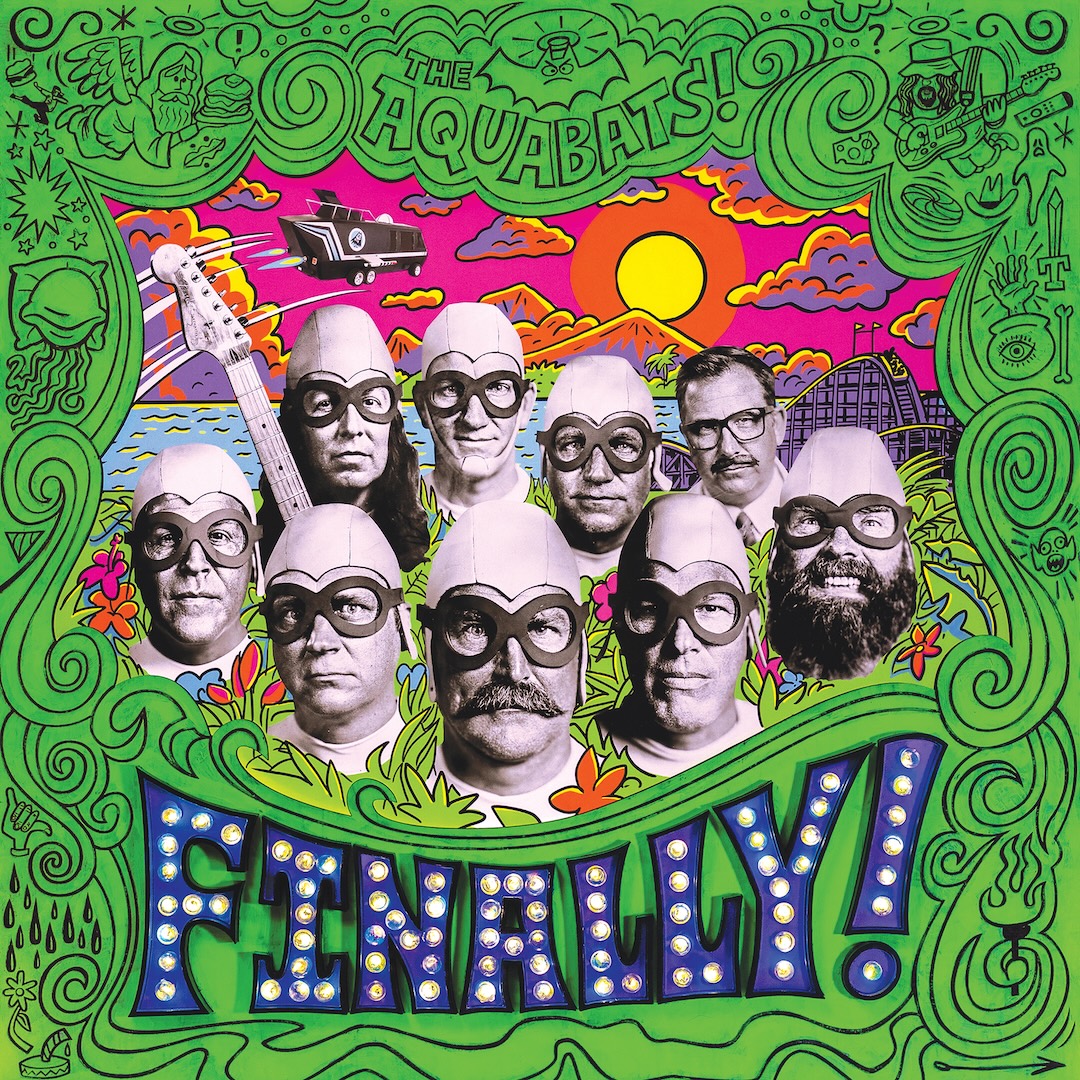
We’re not ska, though we came up in that scene and we certainly have records that reflect those influences. We’re not trying to avoid the term. But I’d say only 20 to 30 percent of our catalog is ska if not less. We have new wave songs, hip-hop songs, reggae songs, we have ska songs. We have the music we make for Yo Gabba Gabba, too. However people want to refer to us is fine with me. It’s more of a bummer when it’s a promoter or a ska fest shouting, “Ska band The Aquabats!”
The layer of the business you’re at is a nice place. You’ve got the band as a calling card. You have the shows as another calling card. Adult rock fans and parents of small kids love you equally. You’re working all the time doing what you love. What advice would you have for a kid who looks at all things Aquabats and says, “I want to do that!”
What you do has to come from love. If you’re out there for the money and the fame, that’s what will come through in your music. Every now and then that works for people, but almost never sustainably.
Another thing is, it’s okay to make mistakes; you’re gonna make mistakes all the time. But if you don’t learn anything from those mistakes, you’re not growing as a person. The last thing I will say is, collaborate with people. You learn so much from working with other people. You take bits and pieces from everyone, especially compared to sitting in your bedroom studio with your laptop. As a self-taught musician, one of the things that helped me most was sometimes inserting myself in situations where that may have been a bit annoying for someone. But when they eventually realize, oh, this person really wants to learn this, it’s an incredible feeling. So, you’ve got to just go after it.