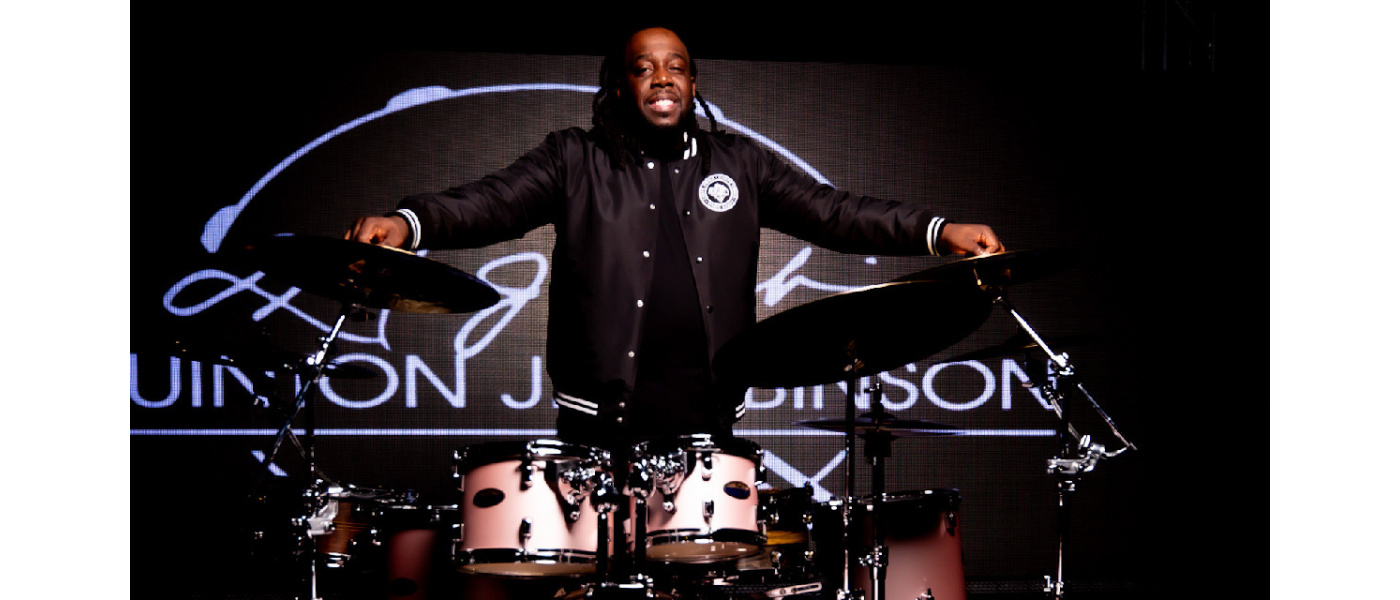
“The beautiful thing about AUDIX is that you really don’t hear the microphone — you hear what it’s amplifying. It’s like the mic disappears and gets out of your way.”
Hamilton is universally hailed for bringing musical theater to a larger and wider audience than Broadway ever dreamed of. Chronicling the American Revolution in modern song and rap, creator Lin-Manuel Miranda’s history of “America then, as told by America now” won 11 Tony Awards in its initial Broadway run and has since grossed over one billion dollars worldwide. Quinton Robinson holds down the drum throne on the current North American tour. The multi-talented “Q” also records his own music and produces artists, has developed a line of drumsticks, and creates photorealistic stage plots of musical equipment for bands. He relies in AUDIX microphones across all his creative work. For Hamilton, includes the time-tested on kick drum, the compact and on toms, and the dynamic instrument mic on snare. In the studio, he adds an small-diaphragm condenser mic on snare bottom and a pair of as overheads. He spoke with AUDIX about his music and microphones from Hamilton’s stop in Denver, Colorado.
What was your pathway into music?
I had a natural aptitude since I was about three years old. I like to say I didn’t choose music — music chose me. I grew up playing in church and went to a performing arts high school. But I went for musical theater because I wanted to be an actor. It wasn’t until undergrad college that I considered playing drums as an actual career path. Through the examples of so many people I met along the way, instructors and mentors, I finally started thinking of it as what I wanted to do and could do with my life.
One of your more recent credits is playing in the orchestra for the tour of Hamilton. Tell us about that journey.
I started playing Hamilton just about two years ago to the day. Prior to that, around this time in 2022 I spent a year doing Ain’t Too Proud, which is a Broadway musical about [legendary soul group] The Temptations. While I was doing that show, I got a call from the contractor for Hamilton asking me if I would be interested in auditioning. You know, in this business, you say “yes” and figure out the rest from there. I had one week to submit a demo for five songs they’d sent, and they only wanted to hear the drums and the click track — nothing else. I sent those songs in, and two or three weeks later, I got the call saying that I had the gig. I’ve been here ever since.
In addition to drumming and producing, you create very realistic music equipment diagrams for stage plots. How did this side hustle develop?
It arose out of a practical need. Before I played for Broadway shows, I toured with Avery Sunshine. When we’d go overseas, the stage crews and backline rental companies usually didn’t have English as their first language. Even with a detailed written rider, often I’d show up and things would be almost completely wrong. I have some artistic background, so I figured that if a picture is worth a thousand words, a detailed visual diagram is worth ten thousand. I stared doing them for drum kits and got them to the point where it was impossible for anyone to look at one of these and get it wrong. A couple of keyboard player friends saw them, so I began doing them for keyboards, then for guitar and bass rigs, and eventually for entire stage plots. Currently I still make them by hand, but I’m developing software, including mobile apps, so people can download plots and put specific instruments and amps and other gear in them.
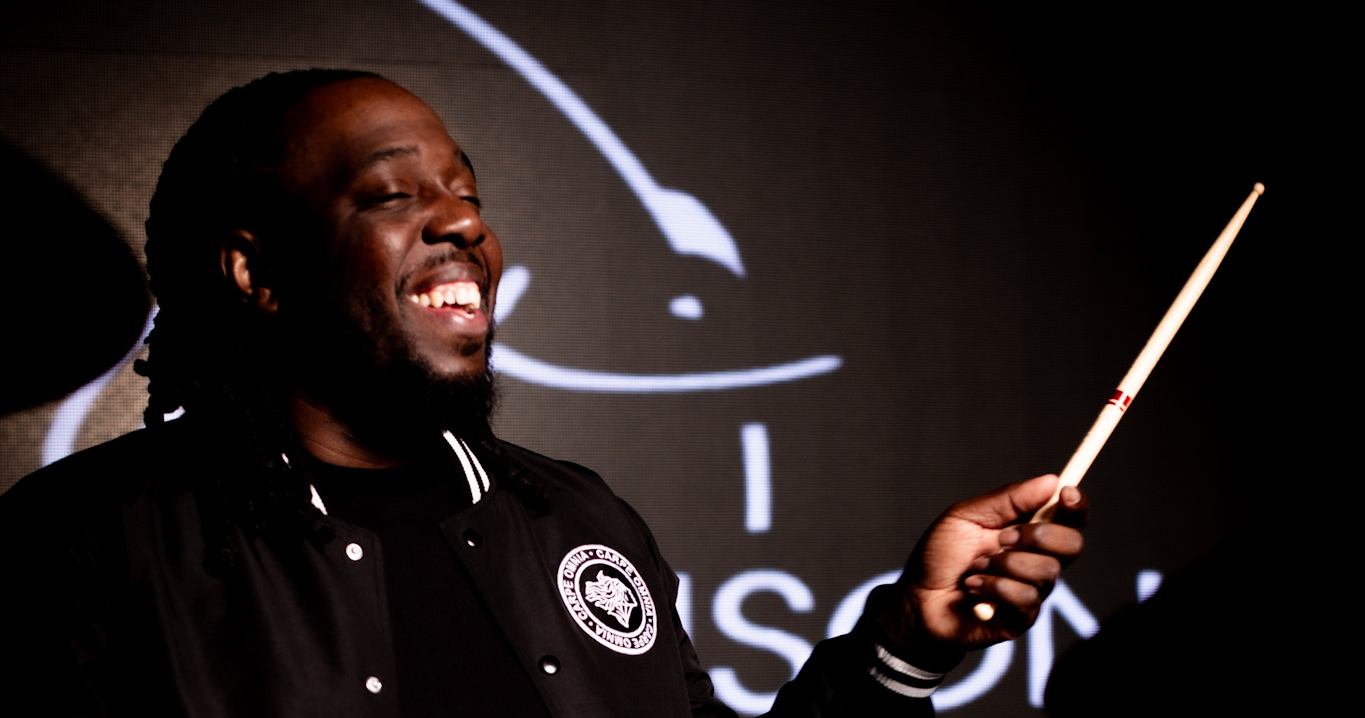
You also have a studio business in Atlanta.
I have a home studio there. Honestly, it was what got me through Covid, recording projects for different clients. I did quite a bit of Broadway-adjacent stuff because, although there are plenty of incredible drummers in New York, many of them didn’t have a way to record and all the studios were shuttered.
Does your current touring schedule leave you any time for other projects?
My days are mostly free, so yes. A passion of mine is programming in Ableton Live. Recently I was commissioned to do the drum and music programming for a dance break in Spamalot, the Monty Python musical that was on Broadway earlier this year.
When and how did AUDIX microphones come into your world?
It was around 2010 and [AUDIX founder] Cliff Castle was still there. We met at some random mixer at the NAMM Show and he let me pick his brains. We started talking from time to time on the phone after that. I’ve always enjoyed the quality and consistency of AUDIX mics. You know exactly what you’re getting, and I appreciate that with so much to contend with in studio recording and in live performance. The last thing you want to worry about are your microphones, and with AUDIX, I know exactly what I need to dial them in to get the sound I want. When Cliff asked me if I would consider becoming an AUDIX artist, it didn’t take me long to say yes! So, AUDIX has been a part of my career now for going on 15 years.
Tell us anything you’d like about which mics you use onstage and in the studio.
My stage and studio choices are not too different from each other. In the studio, I use the i5 on snare and the ADX51 on snare bottom and hi-hat. I use the D2 on rack toms and D4 on floor toms, and obviously the amazing D6 on kick. My very first AUDIX rig had the CX112Bs as overheads. Then, I got a pair of A131 and the CX112s [now discontinued] have become room mics. So, that’s the studio.
On Hamilton, I have five snares in play. Main snares use the i5 and the auxiliaries have the D2. The D2 is also on timbales.
Have you gotten any comments on your sound from the live show?
The quality is amazing. Every musician that comes to hear the show goes, wow, your drums sound so great. The beautiful thing about AUDIX is that you really don’t hear the microphone — you hear what it’s amplifying. With a lot of mics I’ve tried, when I listen to the playback, I really hear their characteristics. Not so with AUDIX. It’s like the mic disappears and gets out of your way. It doesn’t make a drum sound one way or the other.
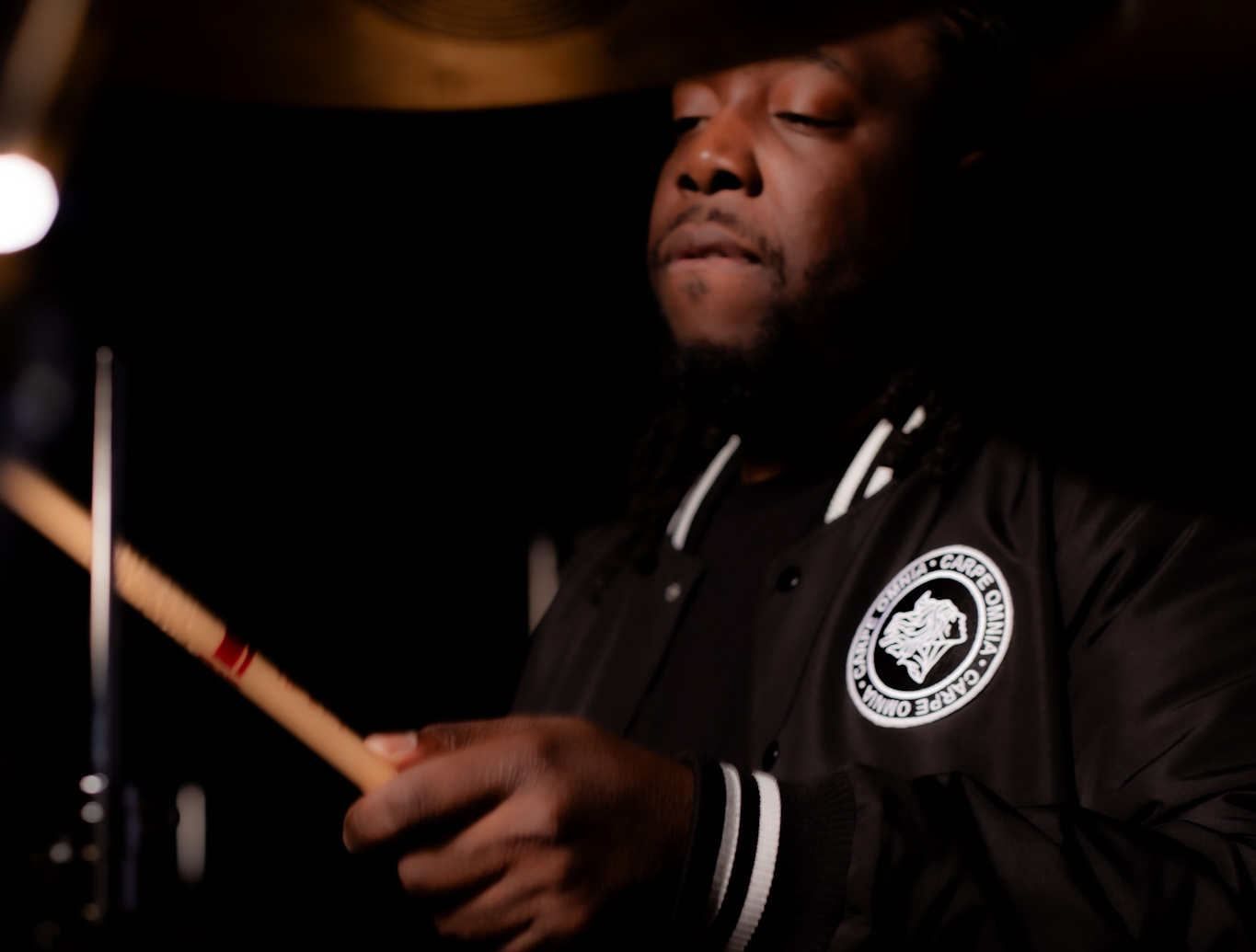
Do you EQ your drums onstage?
One of the things I pride myself on is that on Hamilton, there is almost no EQ on the drums. In some theaters, we use maybe a little bass rolloff to avoid rumble on the kick and floor toms, but that’s it. Otherwise, the knobs on the channel strips are straight up and down across the board. That means the mic is picking up exactly what the source is, without any coloration from EQ.
Would you say you have a favorite mic?
I wouldn’t say that, because it’s all about the relationship of the mic and the source. I will say that when I go out on the road with a band or on my own, I like the Micro D mics on toms. They sound great and they’re so simple to set up. Also, there will be a pair of SCX25A in my future. I’ve heard so much good about those “lollipop” mics. But with the tour going now, they’d be collecting dust. When I get back, though!
Do you prefer certain preamps to pair with your AUDIX mics?
In my home studio, I don’t use anything outrageous — just my PreSonus StudioLive mixer. They pair very well with that. Here’s the thing. On a tour like this, I’m very boots-on-the-ground. I’m interfacing with other musicians all the time, and some of them use mics from AUDIX’s competitors. In most cases, I’m thinking, I can hear their mics and their processing just as much as I hear their instruments. It doesn’t sound natural.
Hamilton has been described as a hip-hop musical, so drum sounds must be crucial.
That’s not incidental! Not to minimize any other show, but even though most musicals have rhythm sections, it’s not like getting the perfect drum sound is essential to the story. It is with Hamilton. It matters how I’m playing, and how the front-of-house engineer is mixing the drums. AUDIX mics make all of that easier, so in a very real way they contribute to telling the story. That’s why there are currently six touring productions of Hamilton, and all of them are on AUDIX.
What advice would you give to your younger self, or to someone who aspires to having a gig like yours?
Great question. The first thing that comes to mind is, be serious but don’t take yourself too seriously. Be serious in the sense that the work you put into it equals the results you get out of it. But not taking yourself too seriously includes things like realizing that success is not a linear path, so don’t get to stressed. Mainly, don’t discount or minimize where you are and where you’ve been just because it’s not your vision of where you want to be. All performing artists need to embrace our present and our pasts, because even though it might not feel like it in the moment, they hold the lessons and the steps that will lead to that eventual vision — in ways we can’t necessarily predict. That’s the main thing I wish I’d known 15 or 20 years ago.