“Considering all the microphones on the market through a filter of simplicity, utility, superior quality, and affordability, AUDIX was the logical choice.”
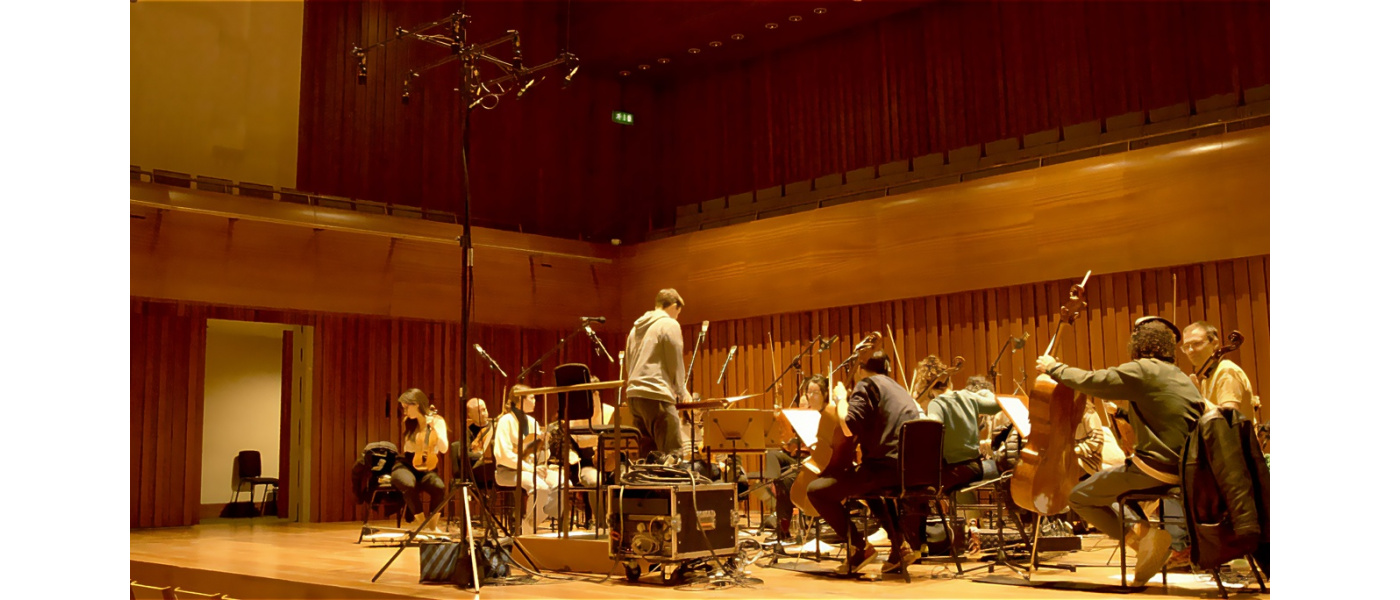
Guildhall School of Music & Drama is a vibrant, international community of musicians, actors and production artists in the heart of the City of London. Established in 1880 and ranked number one in Arts, Drama & Music by the 2024 Complete University Guide, the school offers training in all aspects of classical music and jazz, along with drama and production arts. Driven by a need to capture film soundtracks performed by their newly instituted Alumni Session Orchestra and Alumni Session Choir, their recording and AV program recently added twenty AUDIX and a to their production arsenal.
Impressed by their great sound, simplicity, utility, and build quality, Guildhall soon found the AUDIX microphones to be their choice for everything ranging from student projects and recitals, to groundbreaking live Dolby Atmos capture, among other applications. Priding themselves on being a global leader in creative experimentation and research, Guildhall even has stratospheric aspirations for the microphones. We sat down with Guildhall’s professor Julian Hepple, Head of Recording and AV, and Mimi Hemchaoui, Audio Operations Manager, to learn more about the amazing work they are doing with AUDIX microphones today and their future plans.
Let’s start by hearing about your background. How did you get into audio and then specifically, how did you come to work for Guildhall?
Julian Hepple: I was lucky to get my start in recording studios as a kid. When I was eight or nine, I found myself making tea for Spice Girls and various other British pop acts at Steelworks studio in Sheffield. Those early experiences inspired me to go Trinity Laban college for music. One day while studying orchestration and arranging, it was a joy for me to realize that arranging and mixing music are the same thing. You use the same part of your brain and you’ve got the same intentions: pull as much emotion as you can out of the music.
After graduating, I had a freelance career for about 15 years, where I would make records for artists and bands in the studio, and then go on the road with them as their live sound engineer. That was when I first started using a load of AUDIX stuff.
The year I got married, I spent 220 days on the road and decided it was time to change it up a bit. The planets aligned and I’ve been in the recording audio visual department at Guildhall since 2018. Now I am the school’s professor of digital performance and as head of recording and AV, I also look after the teams that do the great tech work within the school, of which Mimi is one of our vital members.
Mimi Hemchaoui: I had a very similar start to Julian. I helped out in recording studios from age 15 to 17 and then pursued a degree in audio engineering at the University of Surrey. I did my internship here at Guildhall, which is where I first met Jules. Then after I finished my degree, I spent about a year as a freelance recording engineer, mostly looking after the recording studios at Roundhouse Trust in London but also doing the multi-tracks of their live shows. When a full-time job came up here, I applied and got it. Now I oversee the audio operations.
Could you tell us a bit about Guildhall and what does it mean to work for such a prestigious learning institution?
Julian Hepple: Guildhall is a performing arts conservatoire where you can study music, drama, production, and performing arts. We have a growing research department as well.
In the Guardian poll, which is the primary higher education poll in the UK, Guildhall is consistently voted the top place to study music in the country and just recently, it was named one of the top four institutions in the world to study performing arts.
We have about 1200 students from 65 countries working on music, everything from early music to modern electronic and produced music, and every aspect of classical music, jazz, improvisation, and sonic art.
Then we have our flagship drama program, where many of Hollywood’s most famous film and TV actors have graduated from, including Daniel Craig Ewan McGregor, and Orlando Bloom. It’s not just acting, but production as well, which covers everything from set design and realization, costuming, and also theater technology including theater sound, stage lighting, and video. We offer a Video for Digital Design course, which covers projection mapping and VR based experience projects.
As a conservatoire, we deliver at the highest level in the traditions of music making, as well as the nuts and bolts of music production. But we also place emphasis on leaning into the future edge. What does it mean to be an artist in the 21st century? What’s the role of the artist in society? Things like that.
How as the head of recording and AV do you fit into that? What specifically is your role?
Julian Hepple: We take a two-pronged approach. We provide a professional service to all the students, be that recording studio experience, live performance capture, or any of the ways that they might integrate with technology in their role as performers.
To that extent, we make about 8000 pieces of content a year. Every performance that happens within the school is captured, from a lecture grab that might be fully automated and not necessarily go past human oversight to big productions like a 120 channel, 20 camera, live broadcast.
We also deliver a variety of courses and modules to students, not necessarily just straightforward technical skills, but also so they can learn the relationships that they may have as creators. For instance, Mimi runs a recording studio basics course which helps the musicians understand the way they exist in the studio and how it might be different from being on stage. We also teach engineering for producers, bits of video editing and audio networking, microphone placement and similar topics.
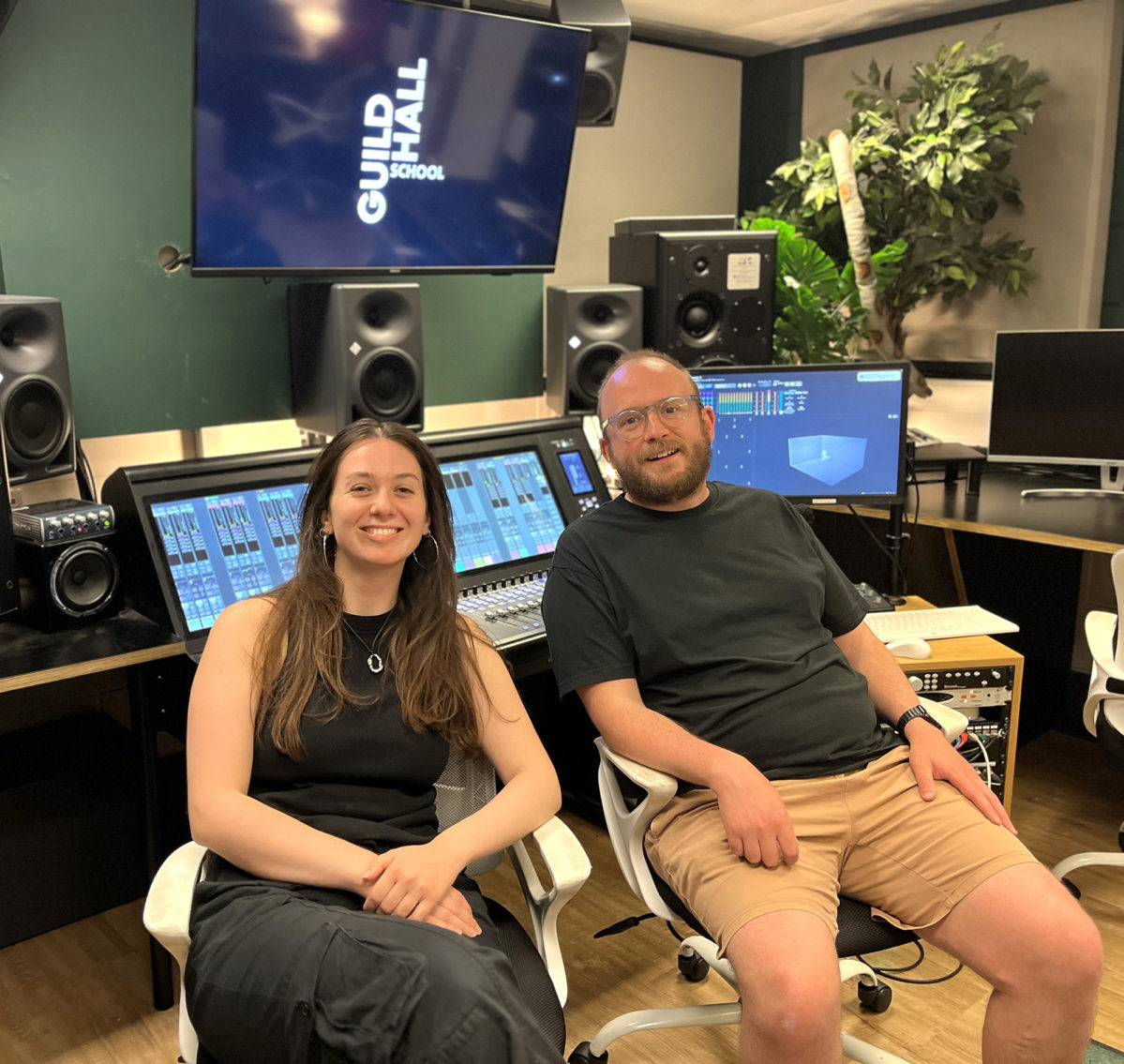
Mimi Hemchaoui: In terms of audio operations, I’ve been focusing on the progression of Atmos and the recent configuration that we’ve developed. We now have a 7.1.4 Atmos mixing studio which was tuned and approved by Dolby and delivers pre-approved masters to Universal Music.
Julian Hepple: We do quite a bit with Universal and Dolby. Their UK headquarters are literally down the road from us. We work differently because we capture session orchestras in Atmos at the source, rather than fake it afterwards. We’re also starting to have more creative sessions with producers, so they write for Atmos from the beginning rather than just throwing the technology in at the end as an afterthought. That’s one of the reasons why we bought the AUDIX mics, to enable us to capture acoustic music in a more spatial environment, which is fun.
Julian, what’s your background with AUDIX?
Julian Hepple: I’ve used AUDIX forever. In 2014 I was front-of-house for Prince on his Hit n Run tour and we used AUDIX mics, specifically the i5,D2, D4 and D6 on the drum kit. In fact, pretty much every drum kit I’ve ever mixed usually ends up being captured by AUDIX. I’ve produced four albums for a sitar player named Anoushka Shankar. We used the AUDIX drum microphones along with a pair of SCX25A on the piano. When I’m working with Robert Glasper, we use AUDIX. I could go on.
I’ve always chosen AUDIX because I always feel like I got a bit more than what I paid for, which you don’t always get with other microphones. They sound great and you can throw them around. They’re solid, I know it’s safe to put them in a Pelicase under a plane and feel comfortable that they’re going to work when they come out on the other side.
Tell us about the microphones you just acquired for Guildhall, let’s start with the A231 large diaphragm condensers.
Julian Hepple: The specifics of buying twenty A231 microphones centered around the launch of school’s Alumni Session Orchestra, a paid orchestra of alumni that do full film tracking at proper studio specifications. This allows the composers in the composition course and the electronic produced music course to get queues for their various projects recorded as performed by a professional orchestra. Another benefit is that they can get used to writing for professional players and stand in front of professional orchestras in various forms.
We’ve got a wonderful mic locker that’s has some AUDIX stuff and other mics you would expect from everyone else. We were debating, should we get a load of this? Should we get a load of that? But after it was all said and done, we kept coming back to the AUDIX A231.
I wanted something very quick to deploy and very solid, so the internal shock mount was a huge feature going for the A231. The fact that there is no pad or high pass filter on the A231 is brilliant. I think a lot of that kind of stuff is a hangover from the 80s, it’s not a requirement anymore. No one is filtering on a mic, you just dial it in as you go. You don’t need 20 dB pads anymore because the technology has moved on. You just want to point it in the right place and go.
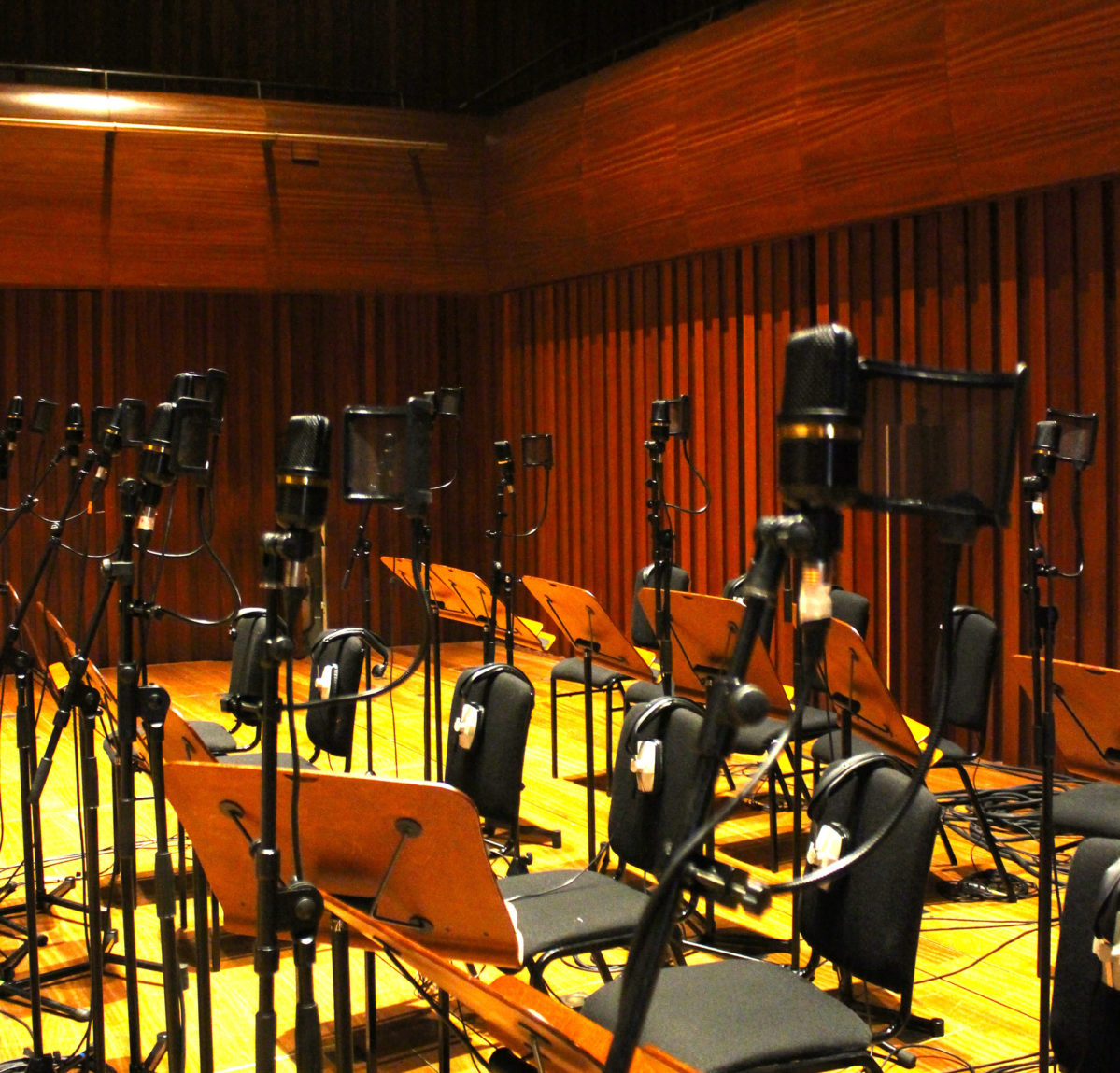
Mimi Hemchaoui: I’d like to add that when we do sessions, we might have 100 people or more in the room. Because we’re using condenser microphones, they’ll pick up a lot of unwanted sound, but if they’ve got great off-access rejection like the A231 does, that means that even though you’ve got 20 mics in the same space, there’s not going to be many phasing issues.
Julian Hepple: We originally bought them to be able to capture the 20-piece Alumni group in a super clean, not phasey, easy, stress-free way. But they’re also an especially useful get-out-of-jail-free card to have 20 of them available at any given time. For example, we’ll have a Jazz Festival where we might have 8 bands a day, and often the tech riders will be as improvised as the performances. We might have a trombone, we might have a cellist, we might have a whatever, but the A231 will get me where I need to be. I think that the utility of AUDIX microphones makes them a smart acquisition for us.
The A231 is relatively flat, but warm where you want it warm. Its point-and-shoot nature is super smart for what we need to be able to do. Plus, they’re super useful for festivals, and events like that, where just having a drawer of them is like “Right. Bang. Away we go.”
So, considering of all the large diaphragm condenser mics on the market through a filter of simplicity, utility, superior quality, and affordability, we were left with not that many to pick from. The A231 was the logical choice.
What do you appreciate about the DP5A professional drum microphone package?
Julian Hepple: Well, to start, everyone uses a D6, it’s the best kick drum mic. It just always works. D2s and D4s are tuned well so they sit nicely with each other. Everyone uses D2s on rack toms, D4s on floor toms, but you don’t have to necessarily treat them differently because the EQ scoops on the mic follow the frequency pattern down, so they work collectively. And the i5s are so transparent and accurate.
Mimi Hemchaoui: One thing that I love about the DP5A drum kit set, is it’s great to have a cohesive set of mics. It just makes the sound seamless when they’re all coming from the same manufacturer. As far as I’m aware, no other manufacturer offers a set like that. I especially like the D6. When we’re capturing a jazz kick drum, it can be notoriously difficult to mix and with the D6, it always sounds great.
Julian Hepple: Yes, that’s also worth mentioning, we get such diverse music, and a purist might feel that you need specific mics for specific types of kick drums, but with just a D6 in front of it, regardless of what you’re miking, you’re going to get 99% of the way there.
We’ve heard you have very sophisticated AV integration at Guildhall, can you talk to us about that? How do the AUDIX microphones integrate into that setup?
The control room I’m sitting in runs an SSL System T and is two floors down from the main performance space. We’re also about 300 meters away from another performance space across the road. We have a site-wide Dante network that runs into 40-odd classrooms that we pull audio from and an NDI network on the other side of the room for video as well.
Where we’re pulling audio and video from all over the campus into this place, I don’t always have the luxury to deal with “oh, that mic’s got a 10 DB pad on it,” or “someone’s set the high pass up to 200 Hz,” or “someone’s put that one on hyper-cardioid by mistake.” We make 8000 pieces of content a year. It’s quite a regular occurrence that Mimi will be running an orchestral session on her own. We can’t take 9 minutes for her to run across the road to change a mic setting.
In addition, the nature of having five or six performances a day, means quite often we don’t get to hear it before we’re recording. We might have a jazz sextet in the recording studio and then go straight from that to a string quartet on a different wall, then to a harpsichord…so you need to put mics out that you know are going to capture things correctly in this space. AUDIX is great for that and that’s why the simplicity of the A231 can’t be overstated. We wanted a mic that we could take out of the case, put it in the right place, and know that we were good to go. We know it’s got a clean output, and we can tidy up our tracks if we need to, but we almost never need to tidy up the recordings.
Can you tell us more about your new Dolby Atmos configuration, Mimi?
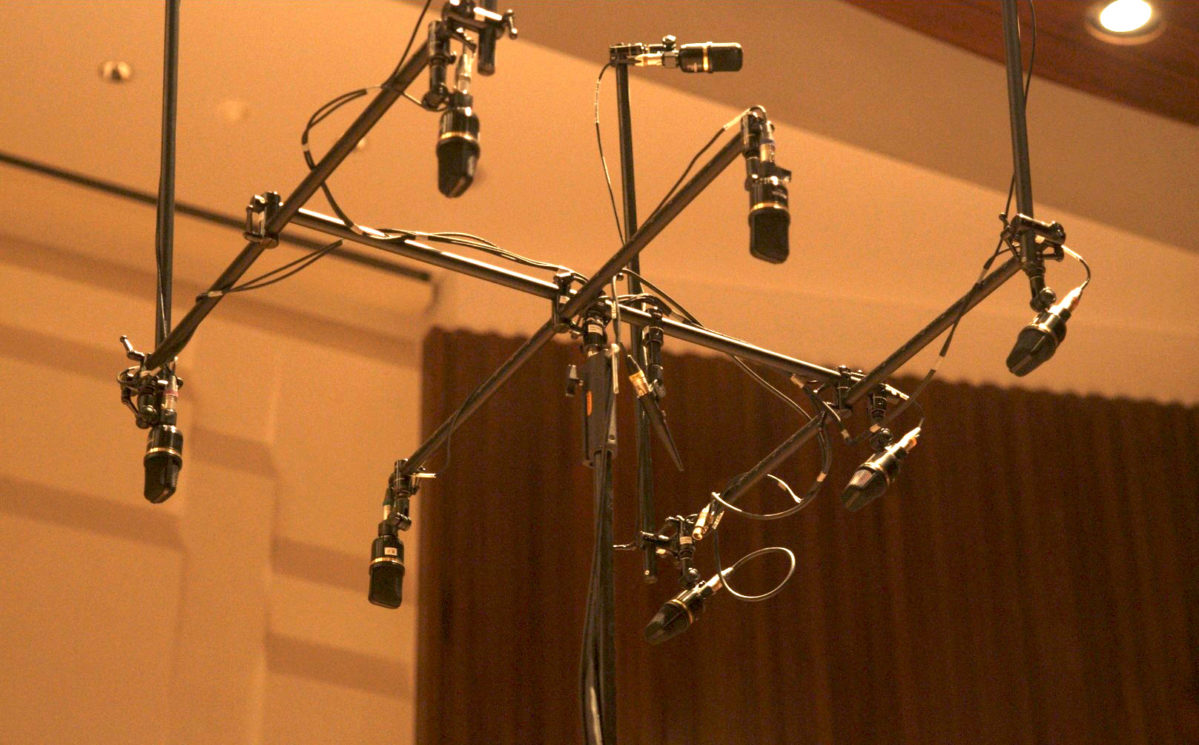
Mimi Hemchaoui: We use eleven A231 microphones to enable 11-point Atmos recordings of an orchestra. It’s super fun. The configuration is called an PCMA 3D Array. It is an immersive array of 12 microphones (11 channels + Low Frequency Effects channel) arranged in a 1×1 meter cube. We use the model SB-3D11 by Grace Designs to mount the microphones.
The idea is that each of the captured channels is intended to be played back through a speaker in a 7.1.4 configuration. We arrange the microphones to mirror that set up from the listener’s perspective, therefore, allowing an incredibly lifelike, live Atmos capture of a performance.
Where you position the mic array in the room depends on where you want the listener to feel they are, because it is an immersive experience. Usually with orchestral recordings in a concert hall, whether it’s the Guildhall Alumni session orchestra or a Guildhall Studio Orchestra live show, we place the array in the middle of the orchestra so that the listener feels as though they are in the middle of all the action. It’s more surreal and allows for more creative mixing techniques. For a more natural effect, we can place the mic array in the audience to create the impression that you are an audience member.
Guildhall prides itself on being at the forefront not just of the conservatoire network, but the AV industry in general. We record Dolby Atmos live, not many companies do that, let alone conservatoires, and we’re also doing 3D volumetric capture, infrared camera tracking, and more. We’re really just curious creatures.
Why did you choose AUDIX?
Julian Hepple: To me, the two things that I associate most with the brand are “AUDIX mics do a lot of the work for you and they’re built-to-last.” Built-to-last is the main thing.
There’s a nice “built in the USA” ruggedness to AUDIX microphones. I can give an AUDIX mic in a little mic pouch to a student who will then go and do their own thing with it, and I don’t need to worry about it coming back broken or damaged because AUDIX mics are not brittle. It’s not the same as giving them an old ribbon mic. With those, if you touch it the wrong way, it dies.
There’s a lot of boutique, exciting stuff that you can use in studio, but we’re putting mics in flight cases, pushing them between venues, checking them on planes. We’re working on festival turnaround times and your microphones just have to work. We can’t deal with things like “this mic needs a special preamp and it’s just lost its fuse.”
And if there is a problem, when you’re using an AUDIX mic, usually you change the cable first before you swap the mic. Whereas if there’s a problem with other microphones you first assume that the mic is the culprit.
And their build quality is better than everyone else.
Mimi Hemchaoui: Julian pretty much covered it, but I’d like to add that AUDIX microphones have active circuitry that prevents leakage and protects the signal from being degraded by electrical signals in the room, which is always useful.
Would you recommend AUDIX microphones to other music, performing arts, and drama programs, and why?
Julian Hepple: To our competitors!?!? I like having an edge…so, no. [laughs]. Maybe we’d recommend it to people further afield.
Seriously, I would definitely recommend AUDIX in any situation where they need what we call, “student-facing stock.” You don’t worry about AUDIX mics getting battered. That’s a super useful thing because you want to be able to put the kit in the hands of the students because it’s their university, it’s their conservatoire. It’s all their stuff, but at the same time, you want to make sure you’re protecting your assets so that they can continue to deliver for you, which is why durability is so important. But best of all AUDIX microphones are durable and they sound great, but you don’t need to do much to use them.
For example, if you’re a cellist and you want to record yourself at home. You can come to us. We’ll give you a little recording interface that requires little brain power to operate, and one of these A231s. You can point it at your cello and all you have to worry about is your cello playing. You’re not going to have to get your tape measure out. You’re not going to make sure that this is happening, or that this or that setting is right. What we need and what our students need is a point-and-shoot microphone so they can concentrate on making music, and that’s why the A231 is so very useful.
What’s on the horizon for you at Guildhall and how do the AUDIX mics fit into that?
Julian Hepple: This term we’re finishing 8 short films with our actors that are full green screen virtualizations. We’ll be using the AUDIX mics for the session orchestra recording for those short films. We have 250 final student recitals. Each of those will be multi-cam filmed and recorded so their final performances can be used as show reels when they spring into the industry. In the next 10 weeks, we’ll be recording two full-scale operas, two full-scale plays, 40-or so music concerts, there’s a jazz festival…essentially, there are seven or eight things a day and our AUDIX mics are essential.
We run a project in the Barbican Centre, which is about bringing new audiences into the concert hall. Last year we paired with a drum and bass label. It started with the question “Can we put the club in a concert hall?” So, we did a drum and bass plus massive orchestra event there, but with arena-sized lighting and lasers. We’re doing another one this year, but then also we’re also going to try and flip that concept and put an opera on in a club.
We are also looking at sending weather balloons into space to record audio as they go up to see how Atmos sounds at different pressures and make some sonic art installations out of that material.
In short, we like to be driven by projects, not by what we can do, which is why it’s so important that you can open the mic locker, grab the AUDIX mics, plug them in and they just work. I don’t want to be thinking about the tech. I want to be thinking about the project.
The weather balloon project sounds fascinating. You’re planning on sending an AUDIX mic up to the stratosphere?
Julian Hepple: We’re in the simulation stage to get approvals from the Civil Aviation Authority and we’re not quite sure what we’re using yet. It may come down to weight.
A synopsis of the project is when the balloon is travelling out to space, it plays some pre-recorded music from a speaker box in a spatial format, and we’ll have an array of microphones capture the music into a Raspberry Pi device or something similar. When the balloon gets too high, the atmosphere makes the balloon pop, a parachute will open and the recording setup drifts to the ground. We’ll figure out where it lands, ingest the data, and then hear what happened.
You know that quote from Alien, “In space, no one can hear you scream?” Well, we’re going to find out how far you can go before they can’t hear you scream. [laughs] Seriously, we’re going to find out what those recordings sound like and answer questions like “How does atmospheric pressure affect sound?”
The first thing that will likely happen is we’ll see if we can make some sonic art from that material. Or perhaps, the students will use the recordings as source material to write some music. But we’re also going to learn what interesting acoustic phenomena we can then replicate in Atmos. That’s the big thing, this work might be able to be translated into more accurate audio based on elevation in films.
Plus, it’s got a nice story element to it. We’ll capture some 360 footage and try to manipulate the audio spatially to correspond to what the cameras are seeing and just experiment and play.
This is a project we’re running with the Sonic Art and Electronic and Produced Music students. It’s next term, but it gives you an example of the kind of stuff we do. It’s not just “record an orchestra in this room and a big band in this room,” there’s fun experimental and investigative stuff going on, too.
Anything else to add?
Julian Hepple: Yes. I likely couldn’t have gotten 20 of anything else here in the same time frame. In our locker we already had a couple of drum mic kits, and a bunch of D6 and D2, that we’d bought through music shops, but we didn’t have a relationship with the AUDIX UK distributor, SCV Distribution beforehand.
I got Ian Young from SCV on the phone and said, “I want twenty A231 mics.” He responded, “I think I can help you and will call you back in 20 minutes.” And he did, saying “We’ve got exactly 20, when do you need them? I can have them on a plane tonight.” We thought “That’s a good sign” and ordered them straightaway. I’m still impressed that it happened very quickly and very smoothly. That was great customer service.