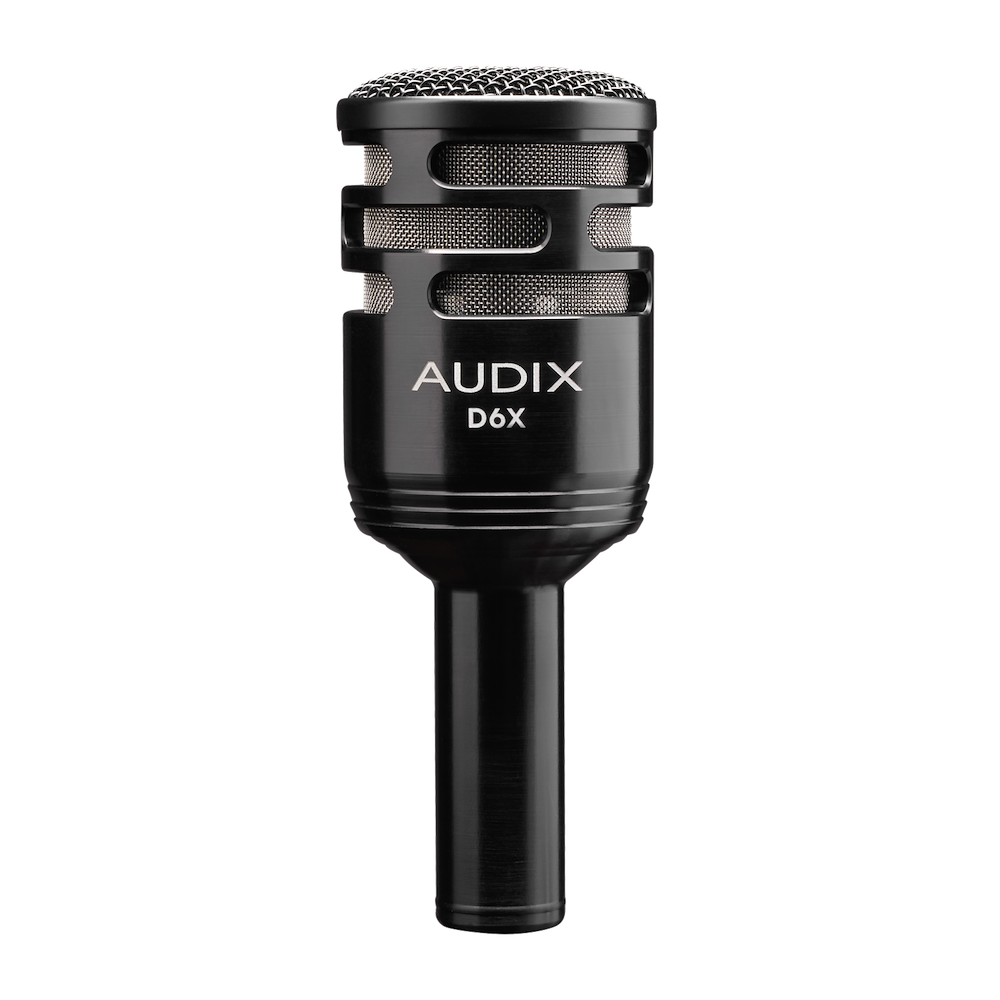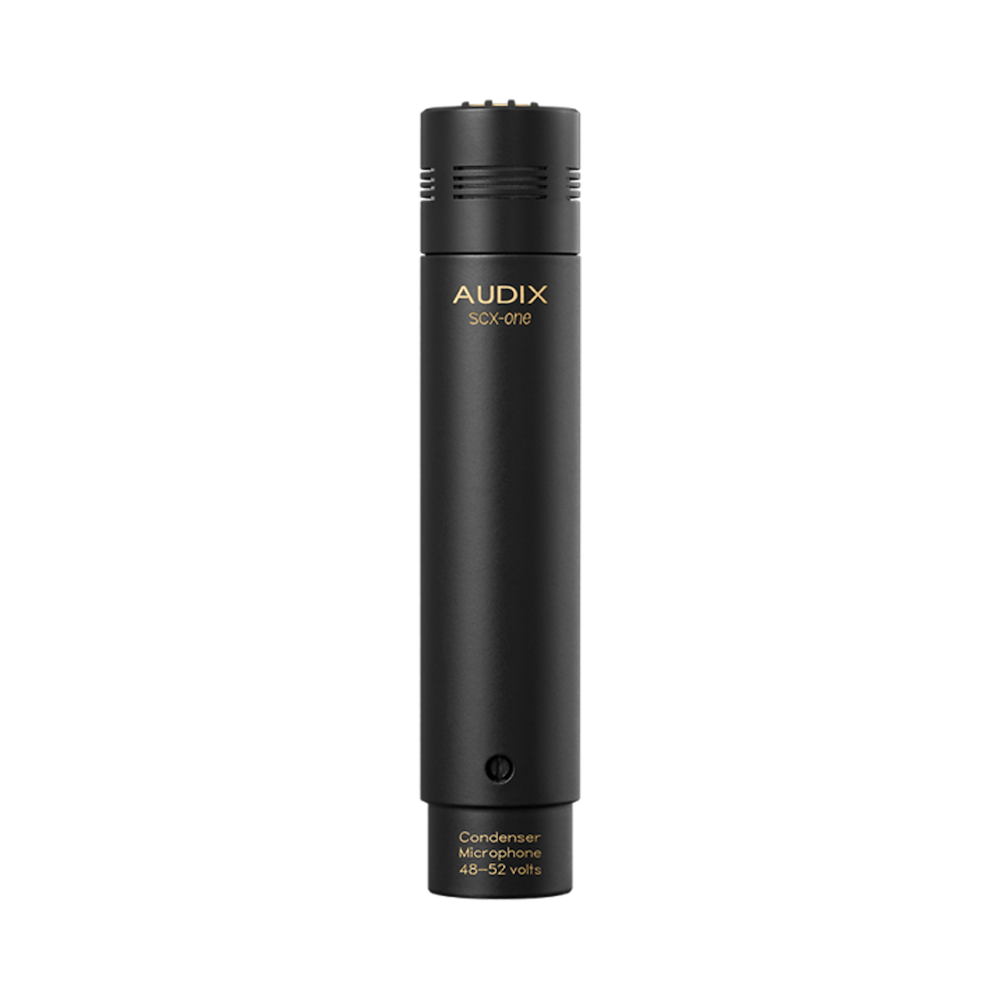
“I’ve never used anything but the D6 on kick in my professional career. … The D6X makes a great mic even better by giving you the versatility of different sounds.”
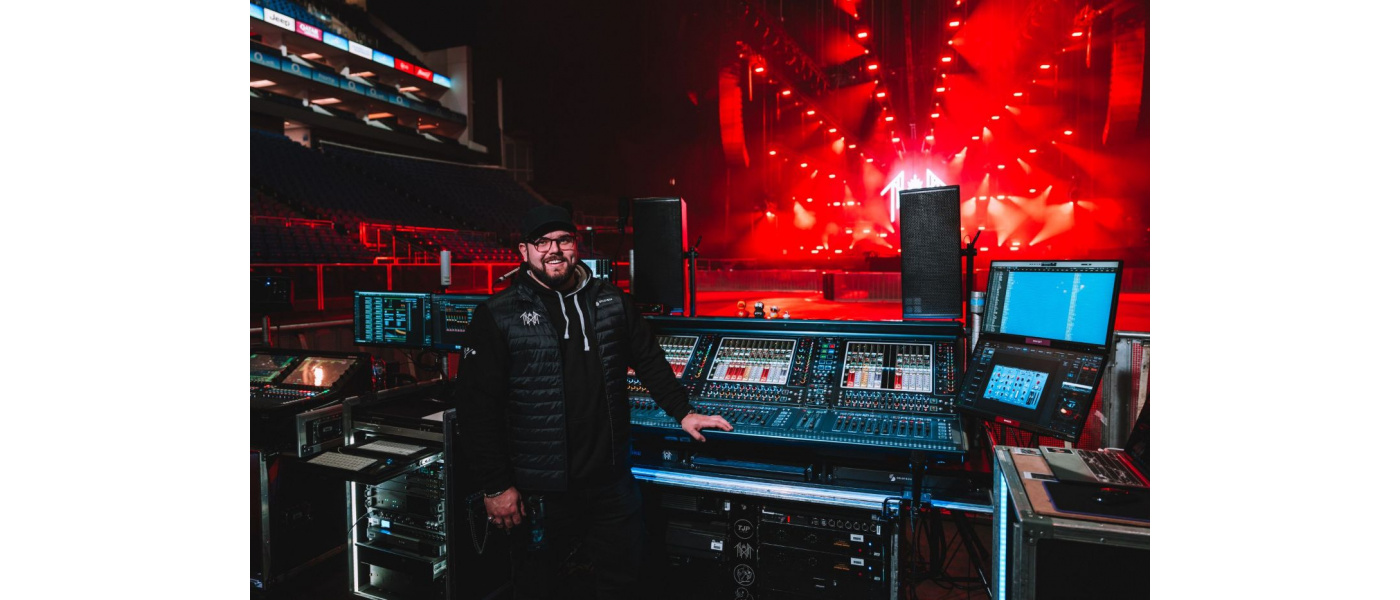
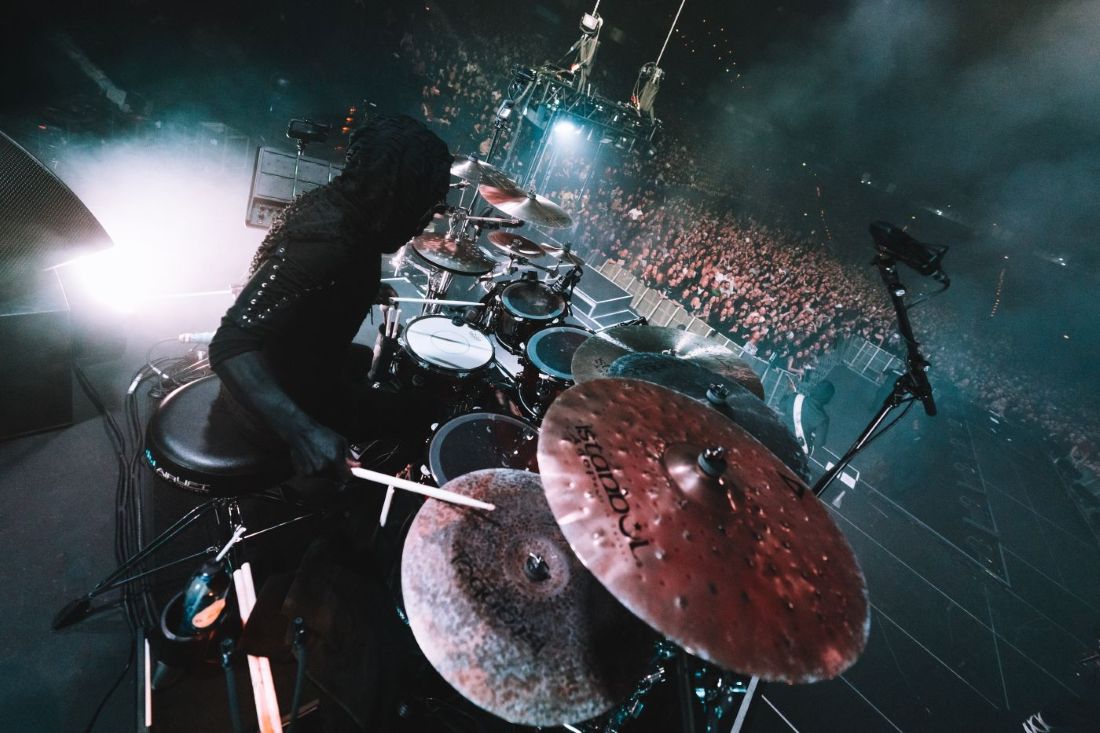
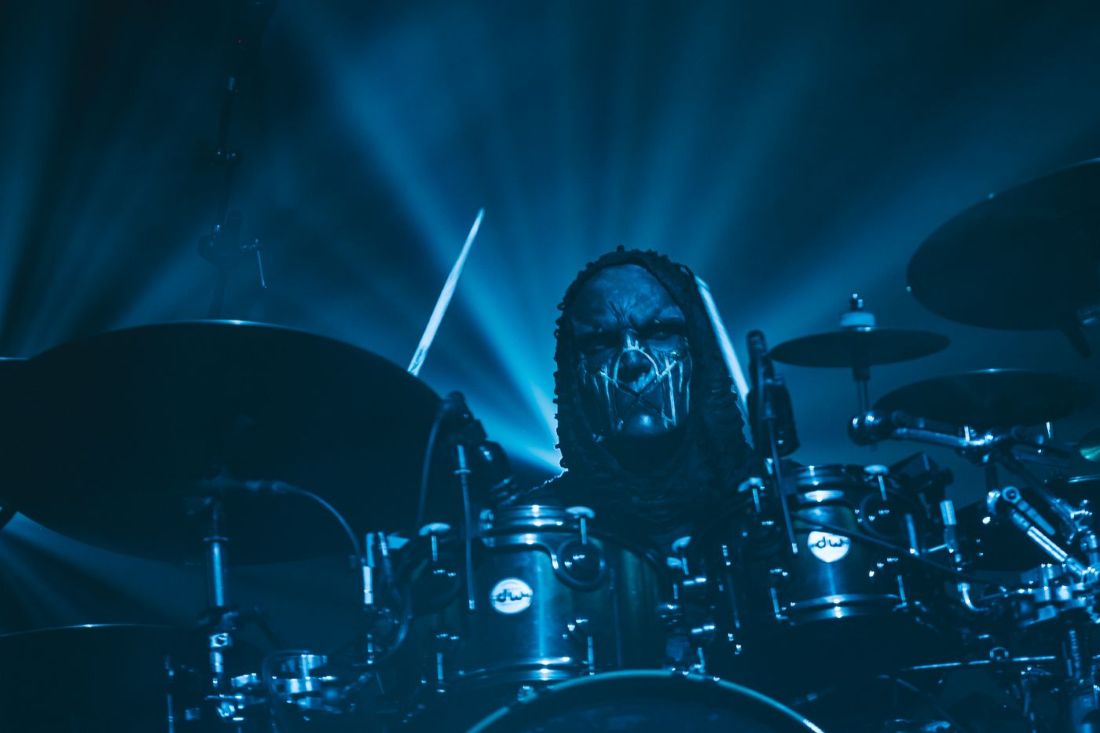
Sleep Token may be the most committed concept-rock group of the 21st century. Appearing only in costume, they weave a mythos around an ancient deity called Sleep as its earthly apostles: lead singer/instrumentalist Vessel and band members II, III, and IV. Their stage productions could be setpieces in a Jodorowsky film, and their music blends elements of metal, electronica, djent and careful songwriting into a consciousness-altering potion. Songs are “offerings,” shows are “rituals,” and front-of-house engineer Thom Pike mixes a sound so powerful it could indeed summon the otherworldly. His talisman for drummer II is the from AUDIX, joined by the new as well as the compact condenser mic on cymbals. Pike tells us that while the D6 is known as a go-to kick drum solution, it also turns up in an unexpected application.
How did you get into sound and live front-of-house mixing in particular?
I started playing around with audio in high school, for assemblies and talent shows and things. Honestly, I started because it got me out of class, then it turned into a fun hobby. When it came time to choose a university, and what to study, I chose audio engineering. I didn’t finish the degree because I started touring, which became a job before getting the degree to get the job! I toured with bands and worked in small clubs. Then I became lead engineer for a small venue in Cardiff called Fuel Rock Club, which was named after the Metallica song “Give Me Fuel, Give Me Fire.”
What was the road from smaller venues and tours to the scale you do now with Sleep Token?
First, a couple of local bands asked me to go on the road, so I did, playing clubs of, say, 300 to 500 capacity. I used to tour with a band called Holding Absence, who are still quite active. Some are former bandmates of mine. Sleep Token supported Holding Absence on a co-headline tour with Loathe in Manchester. Having the same management for three acts was efficient, and the manager told me, “You need to mix the opening act because they all wear masks onstage, so no one is allowed in the venue when they soundcheck.” So, I’ve been working with for about six years since. We just sold out a 2025 arena tour in America, in support of the new album “Even in Arcadia”.
You also have your own touring support company?
Yes, We’re based in South Wales and one of our main areas of business is connecting tours with experienced crew members. We look after a lot of smaller acts. We supported Sleep Token for a time until they reached a certain size. We also provide merchandise like T-shirts for touring acts.
How did you first become aware of AUDIX microphones, especially the D6?
I never really had a single mentor. Every sound engineer ever I met used the D6 and told me it was the microphone for kick drum. I’ve never used anything but the D6 on kick in my professional career.
How is it deployed with Sleep Token?
In addition to the kick, I use it on the 10-inch, 12-inch, and 16-inch toms. Each has their own D6.
How did you discover the D6 worked well on toms?
We tried it as a laugh in sound check one day. Then, both the drummer, II, and I loved it so much that we stayed with it, and now that’s our standard setup. The only drawback is that the mics are large compared to the rest of the D series, so to onlookers who can see the kit it almost looks like there are extra tiny drums or coffee mugs up there, but the sound it well worth the visual oddity. Sleep Token may try s in the future for that reason, but the D6s sound absolutely great. The new , which we acquired recently, makes a great mic even better by giving you the versatility of different sounds. I should mention that on the tour I’m currently on, with the band Night Verses, we do have D4s on the smaller toms, and they give me most of what I like about the D6. You need less low end given the smaller drum size in any case.
What do you like about the sound of the D6?
The D6 is essentially an out-of-the box mic. When we put them on the toms, they sounded correct before even adding any EQ. It gives you that presence, but the “gut” of the tom as well. Also, we have triggers for gates on the drums to control bleed because the stage is quite loud, and the response of the D6 interacts well with the gates. It makes the whole kit sound very snappy and punchy.
What, if anything, do you add in terms of EQ or compression?
If anything, I’ll follow the curve the mic already has. It depends on which tom, but with the D6 I like to accentuate a slight dip around 200 to 400 Hz, as it makes things even punchier. To be honest I don’t stare at EQs much. It’s all by ear. I’ve found that the more I’m depending on something visual like an EQ graph, the less I hear.
Do you use AUDIX mics in the studio?
Honestly, I’ve never really touched the studio world. However, I work for a band called Creeper, where I’ve used the condensers — the ones that look like a lollipop — as overheads. They’re transparent and spacious. Great stereo picture.
Are any other AUDIX mics in your kit, for Sleep Token or elsewhere?
I just acquired the tiny pencil mics, the SCX1HC condensers, and their sound is amazing for their size. They’re literally the size of your pinky finger. I’m going to try them out as close mics for cymbals during our next production rehearsals for the Download Festival this coming summer. I want to capture the detail in some of the smaller cymbals like splashes and need something that can go very close and be low-profile. We tried other small-diaphragm condensers, and they just didn’t work in this application.
We know you have sound check in just a couple of hours, so we’ll part with the question, what advice would you give to your younger self when you were new to sound engineering?
Never be scared to ask questions. No question is too dumb. The dumb thing is to make an embarrassing mistake because you didn’t ask a question! I know in my earlier career I placed a high value on looking like I already knew everything, and I think that’s common to younger professionals in any part of the music business. There’s a need to look cool and confident. But you hang around awhile, and you see even veteran FOH people who do arena tours still asking questions. So just ask. There’s no need to suffer.