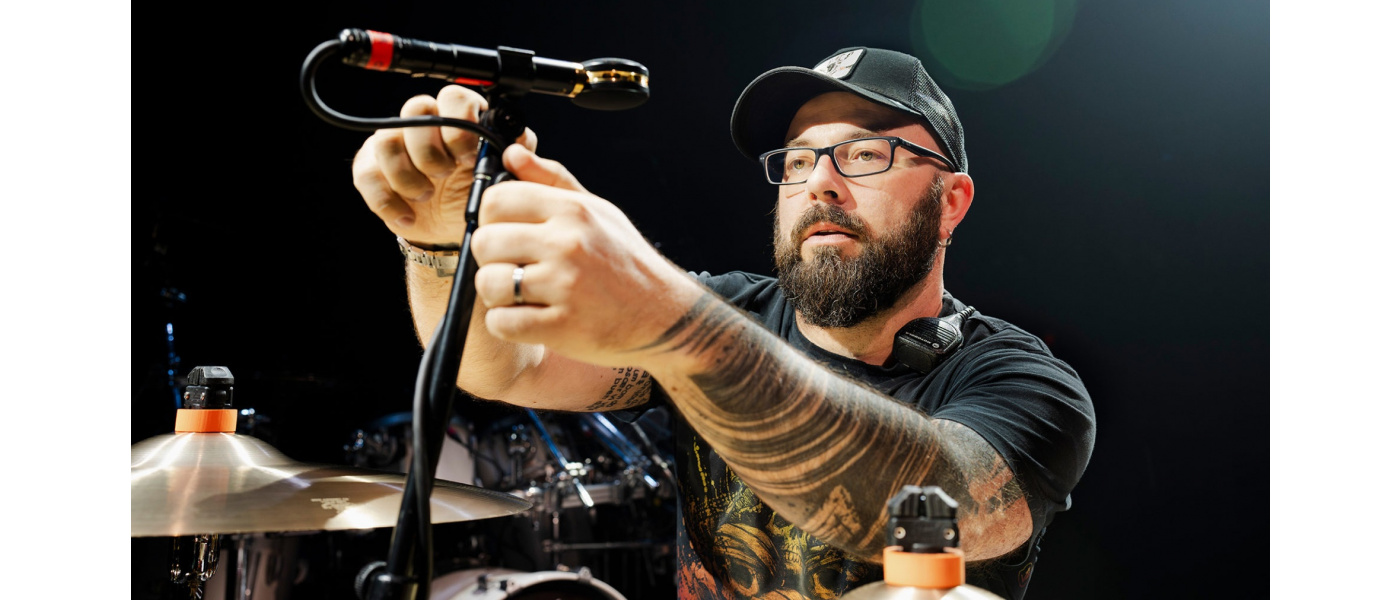
“The SCX25A are my favorite drum overheads ever.”
Hailing from France and now calling Ireland home, front-of-house audio engineer Chris Edrich mixes for some of the hardest-hitting artists in European metal and its progressive and post genres: Devin Townsend, Leprous, TesseracT, The Ocean, Alcest, Klone, and many others. Compact modeling amps offer guitarists and bassists far more control than walls of amp cabinets, and drums become the main shaper of the acoustic environment onstage and in the seats. To optimize this environment for bands and audiences alike, Edrich chooses AUDIX microphones including the on kick drum, on snare top with on snare bottom, on toms, on hi-hat, studio condensers as overheads, and even the boundary mic in an unexpected place. Edrich tells us about what he’s learned as a self-taught engineer, and his AUDIX setup, in this interview.
What are your main musical styles and projects currently?
The big umbrella is rock, and I’ve worked with a lot of metal bands. Nowadays it’s more and more progressive bands. Since I started working with the Norwegian band Leprous, I began to get more and more clients. My biggest gig now is touring with Devin Townsend. It all started working with bands that were opening for bigger bands, and you develop a network doing that. Next thing, the bigger band needs someone for their next project, and they’re already familiar with you. All I had to do was be in the right place in the right time and not f*** up the job!
How did you first become interested in audio engineering?
I started as a musician myself, playing guitar in a small band in the northeast of France. When we started recording our first songs, I found myself very interested in that process. Just witnessing all the steps it takes to record a track, let alone mix an entire album. I just got the bug and started recording other local bands. Also, as we did a lot of touring at the time, I was doing sound for small venues on the side. It might have just been a kick drum mic and vocals, with all the other sound coming from backline. As I got more and bigger gigs, this became my full-time job. It’s a classic way to start for self-taught engineers, which is what I am. I didn’t go to audio college or anything like that. I learned everything in the field.
Do you do any studio recording when you’re not on tour?
Up until Covid, front-of-house was my main gig. Because of the pandemic canceling all tours, I went into full studio mode for at least a couple of years. Now, I have more reasons to want to be home, like family. So, I’m striking a balance of about 50-50 live and studio work. Before Covid, I did something like 250 shows per year. It was a lot of fun, but certainly a grind.
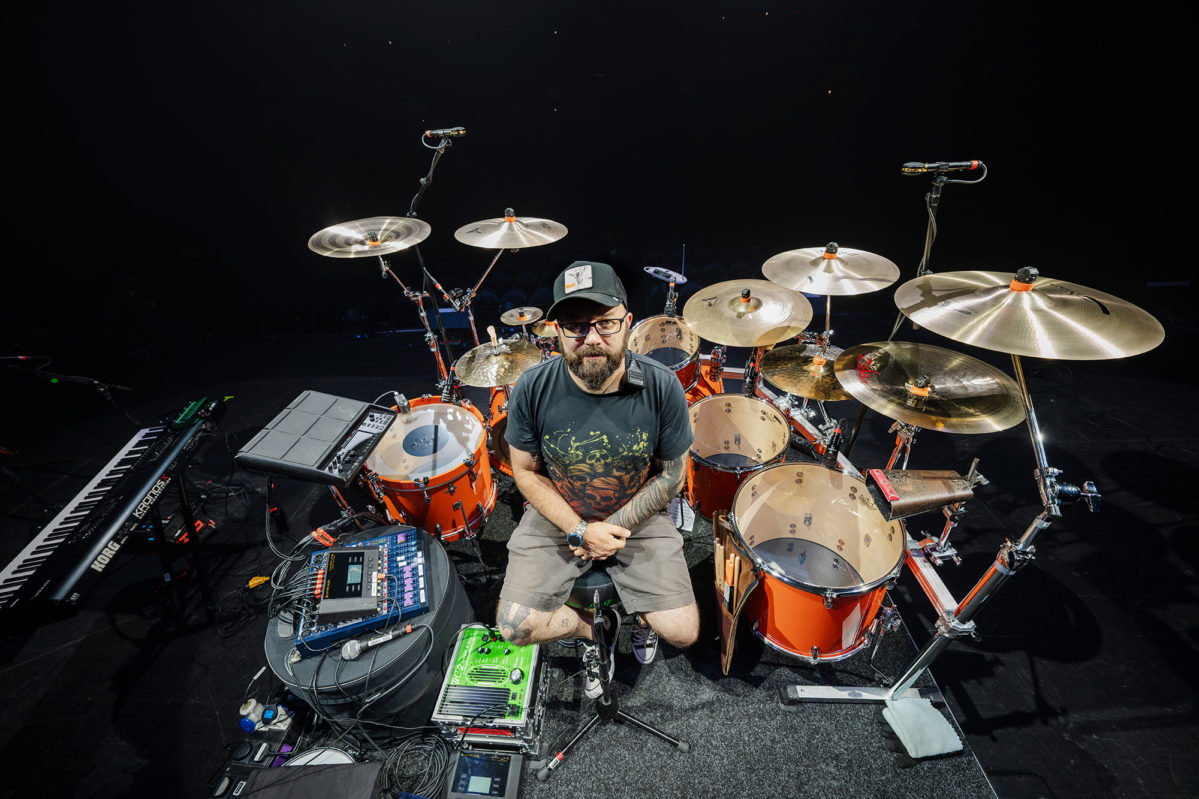
In what applications do you use AUDIX mics?
The most frequent is drums. Across different bands I’ve worked with, I find that if someone has an endorsement deal with a different brand of microphone, it’s usually vocalists. Drummers, on the other hand, are more open to suggestions and trying new things. If they have an endorsement, it’s with a drum company.
I’m also lucky to have the trust of enough artists that they’ll try my suggestions, such as using AUDIX mics. Take Devin Townsend. His only goal is to get the best result possible. He doesn’t care too much about things like brand sponsorships. He was open to trying AUDIX at my suggestion because I said I could get the best results from it.
With him, I’ve managed to get the whole band on AUDIX. The switch was not that much of a negotiation. I also toured recently with a British band called TesseracT. They have other partners, but I was still able to mic the whole drum kit with AUDIX.
Is your kit miking a pretty standard configuration of, say, D6 on kick, i5 on snare, D2 and D4 on toms, and so on?
Yes, with some important notes. I use the D6 outside the kick, but inside the drum I have the ADX60, which is a boundary microphone. It’s very tiny and easy to place, and gives me a nice, bright attack because it’s a condenser. It’s a great complement to the D6, which gives me the big body of the kick.
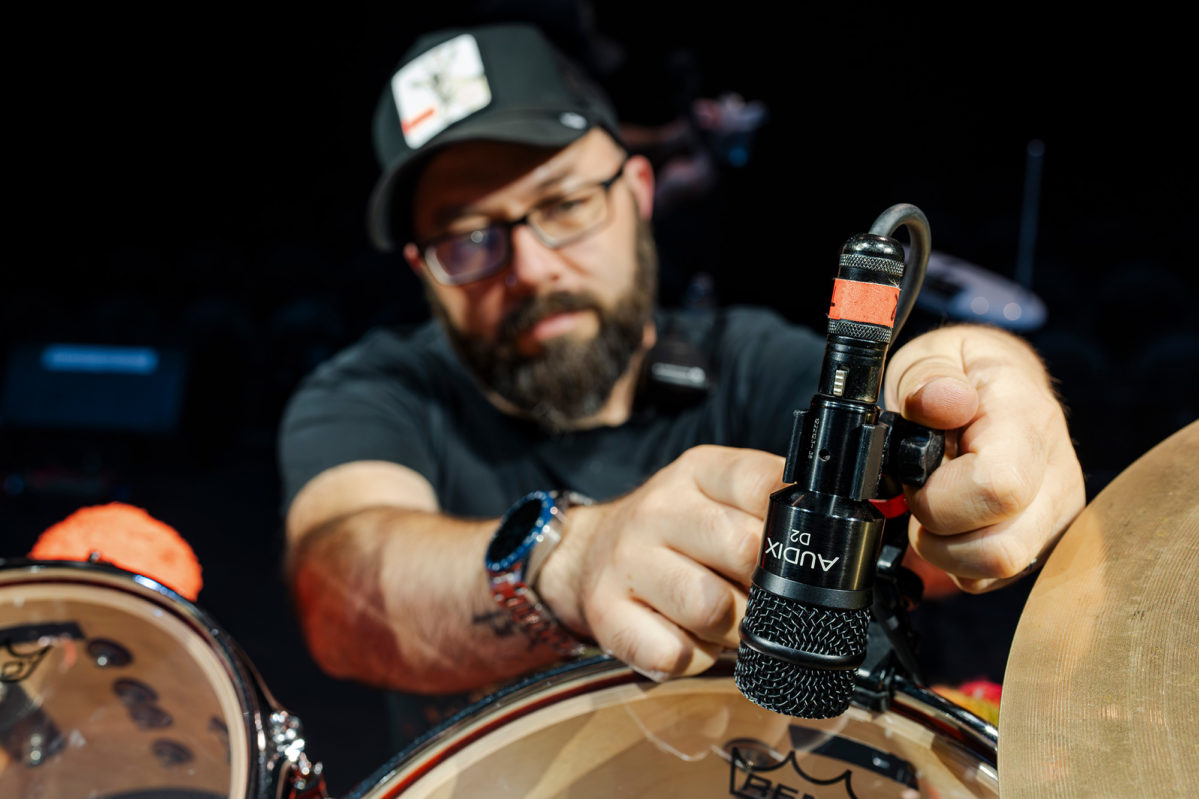
On the bottom of the snare, I use the D2, which people think of as a tom mic but is in fact great in this application. It has a lot of air but not too much aggressiveness in the high-mids.
For spot mics — hi-hats, splash cymbals, that kind of thing — I use the SCX1 pencil condensers. I used to use the ADX51 for this, but the SCX1 gives me similar results in an impossibly compact form. They’re fantastic.
I use the SCX25a as overheads. I discovered those while recording the second album of my band. The studio we were at owned them, and mainly used them to record acoustic piano. But for cymbals, they’re the best overhead sound I have ever heard. I wanted my own pair for a long time, and now I have them! They’re the crown jewel of my kit.
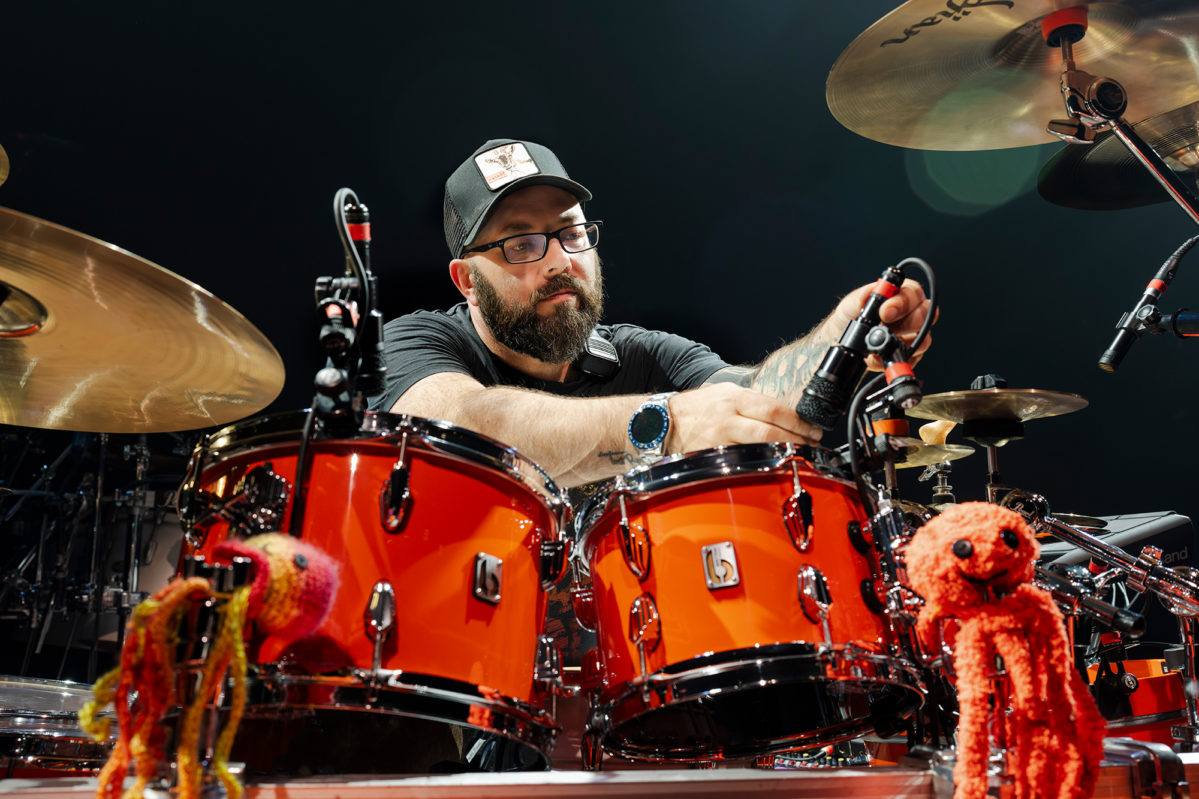
The SCX25A is known as a studio condenser. Do you use it onstage?
Yeah. They work great live. They bring me a very nice stereo image of the drums without bringing in problems like phasing relative to close mics. As overheads, they have a similar quality to what I like about the D2 on snare bottom — that air. Everything over 10kHz is crisp without being harsh. It’s a very produced sound that I have to do almost no work to get.
As far as rejection goes onstage, they’re as good as a condenser can be. I’m pretty lucky in that with most of the bands I work with, drums and vocals are almost the only stage sound. Guitarists, for example, are usually playing through modeling amps such as the Kemper or AxeFX, going straight into the console. So, there’s not a lot to bleed into the drum mics, but it also makes getting a great drum sound that much more important.
I can even compress the SCX25As a little bit, while getting virtually no bleed from outside the drum kit. I realize they’re very well known as piano mics and used in audiophile reference tests, but they’re my favorite drum overheads ever. I think people should be more aware of them for that.
Do you find that the SCX, and AUDIX mics in general, let you do less EQ and dynamics processing after selecting the right mic for the source?
Absolutely. I don’t need to EQ as much as I used to. It depends on the band, but often I’m doing close to nothing after the fact other than the usual low cut on everything except kick.
Can you describe a gig nightmare and how you got through it?
Hah! The challenge here is narrowing it down to one! I could talk about 100 of those. Funny enough, my worst working nightmare was not related to a gear malfunction or anything technical. It was about a house sound guy who was just too cocky. I was touring with the German post-metal band The Ocean, playing festivals. We unloaded and the house guy showed up an hour and a half late. We finished setting up and line checking without him.
The mixing booth was to the side of the house, which is never ideal. The first moment I got back in the room to listen to the band playing, he’s in there moving faders around. I said, “Dude, I had it all set up and I know the band.” He was like, “Yeah, but I know the room,” and wouldn’t budge. It was stressful, and I had to reason with myself not to get angry. Instead, I went to the promoter. I was mixing the final two bands in that set, and calmly told them, “There’s not going to be a show under these conditions.” They actually got him to leave the console and let me finish the show. So, my worst fears are never about gear not working. They’re about somebody not letting me do my job.
That speaks to how important people skills can be even more important than musical or technical chops.
Yes, and I might have been happy to listen to his ideas. But for him, me, or anyone in live sound, the proper voice is “I want to help,” not “I know more than you.”
Let’s shift gears and talk about any recent use of AUDIX in the studio.
Early this year, I finished mixing an album for a French band called Alcest. They’re a sort of fusion of shoegaze with black metal. I had mixed their Live at Hellfest concert, which was aired by European TV channels in 2022 — it’s on YouTube now. I had gotten a lot of great feedback on the sound, which led to me working on this new album.
When we started recording, I was working with them remotely and exchanging files. I recommended changing a few microphones to AUDIX. In spite of the remote setup, the raw tracks I got were great and the mix went smoothly. This has happened with a few bands now.
What advice would present-day you give to yourself when you were starting out?
Ask more questions. Making mistakes is actually valuable, because you’re always going to keep them with you and learn how not to make them again. But then, a “mistake” in one context can be just the right move in another.
Because I am self-taught, I’m always happy to answer whatever I can for people who were in my position and genuinely curious. I learned the theory by doing the practice.
Audio school has a lot of benefits, but the downside is that it can create that guy you ran up against at the festival.
Of course. I envy a lot of the people I’ve meet who came out of Full Sail or Berklee or wherever, because they show up armed with all this valuable theory. But nothing replaces experience, the sort of muscle memory of knowing what can go wrong in the moment and how to work through it. So, again, show up with an open mind and ask questions. Put the human skills first, and people will be glad to teach you the technical skills